0086-18057388688


Linen Cotton Knit Fabric: Technical Guide to 55/45 Single Jersey for Buyers and Garment Makers
Woven linen is well known. Linen-rich knits are harder to make, and the gap shows up in how garments fit, wash and wear.
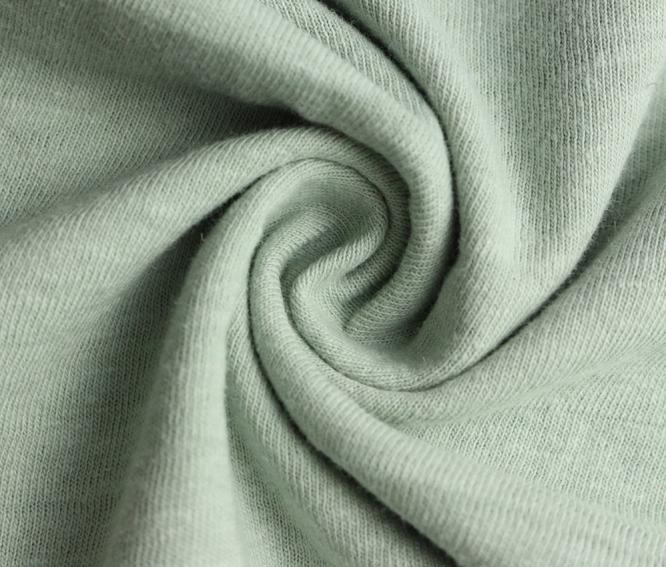
Key specifications at a glance
- Composition: 55% linen / 45% cotton
- Structure: single jersey (plain weft knit)
- Width: 138 cm
- Weight: 185 g/m², a medium weight
- Yarn count: 21S (English cotton count, about 28 tex)
Why blend linen with cotton in a knit?
Linen is a bast fiber with high strength and good moisture handling, but it is stiff and has little natural elongation. Loop-forming knitting needs yarn that bends and stretches without breaking. Cotton helps in three ways:
- Knittability: cotton's flexibility lets the yarn form even loops, which reduces yarn breaks and needle-line streaks.
- Hand feel: cotton softens the dry, crisp touch of linen, so the fabric is more comfortable against skin from the first wear.
- Linen character: at 55%, linen still drives the visible slub texture, the breathable feel and the relaxed drape.
Both fibers are cellulosic and absorb moisture readily, which is why this blend feels cool in warm weather. As a rule of thumb, linen takes up moisture faster than cotton and releases it quickly. Exact comfort performance depends on finish and garment fit, so judge it on your own samples.
What single jersey and 185 g/m² mean in practice
Single jersey has a smooth face made of V-shaped loops and a slightly more textured back. It stretches mainly across the width and has a light recovery. This makes it suitable for T-shirts, tops, dresses and lounge pieces, and less suitable for tailored structure. At 185 g/m² the fabric sits between a light summer tee and a structured knit. It opens up easily for warm-weather wear but still holds its shape across a skirt or sleeve.
A 21S yarn count is a fine-to-medium cotton count. Finer yarn gives a smoother surface, but linen slubs remain visible. That is intentional and part of the look.
Comparing related linen-blend jerseys
Fiber partner, weight and width change both the look and the cutting efficiency. The table compares this fabric with related jerseys from the same mill.
| Fabric | Composition | Width (cm) | Weight (g/m²) | Count | Best suited to |
|---|---|---|---|---|---|
| DD2007236-3 | 55/45 linen cotton | 138 | 185 | 21S | Tees, tops, dresses, loungewear |
| DD1703256 | 50/50 linen cotton, foil printed | 120 | 125 | 35S | Lightweight fashion and evening tops |
| DD2007063 | 50/30/20 three-fiber linen cotton blend | 160 | 215 | 25S | Knit shirts, layering |
| GD2211104-1 | 55/45 linen viscose | 145 | 180 | 25S | Fluid-drape dresses, cardigans |
| DD1905189-2 | 100% linen | 150 | 150 | 30N | Pure-linen summer and resort wear |
Source: manufacturer product pages, zjgcmfz.com. Confirm final specifications and tolerances with the supplier before ordering.
Practical tips for garment makers
- Relax before cutting. Let rolls rest, ideally overnight, and spread without tension. Stretched knit plies are the most common reason a garment measures short after washing.
- Test shrinkage on your own lot. Natural-fiber knits move in the first wash. Use a recognized method such as ISO 6330 for laundering with ISO 5077 for dimensional change (AATCC 135 in North America), and set pattern allowances from the result.
- Sew with care. A ballpoint or light-ballpoint needle and a stretch-capable stitch help avoid skipped stitches and seam puckering. Stabilize neck and shoulder seams.
- Expect edge curl. Single jersey rolls at cut edges. Plan for it when cutting and handling.
- Request performance tests. Ask for pilling (for example ISO 12945), colorfastness to rubbing (ISO 105-X12) and dimensional change reports that match your market's requirements.
Care and common issues
The manufacturer recommends cold or lukewarm gentle machine washing, mild detergent without bleach, and air drying or low heat. Steam or medium-heat ironing removes creases if needed. Three behaviors are normal for linen content and should be explained to end customers: slight first-wash shrinkage, creasing, and small texture variations from natural slubs. Clear care labels reduce returns.
About the manufacturer
Zhejiang Guocheng Linen Knitting Co., Ltd is based in Tongxiang City, Zhejiang. It occupies about 34,000 m², employs around 150 people and reports annual capacity of roughly 5,000 tons, with about 70% of output exported to Europe and the Americas. Its capability page describes full inspection of greige and finished fabric, in-house testing equipment (including pilling and rubbing testers) and monthly new-product development.
The company lists GOTS, OCS, GRS, RWS and OEKO-TEX Standard 100 certificates. Certification scope is specific to each product and lot, so buyers should request the current certificate and transaction documents for the exact article they plan to order. For sustainability-led programs, see the mill's organic content and recycled content ranges. The full linen, hemp and blends collection and more industry news are available on the site.